
01
Edge
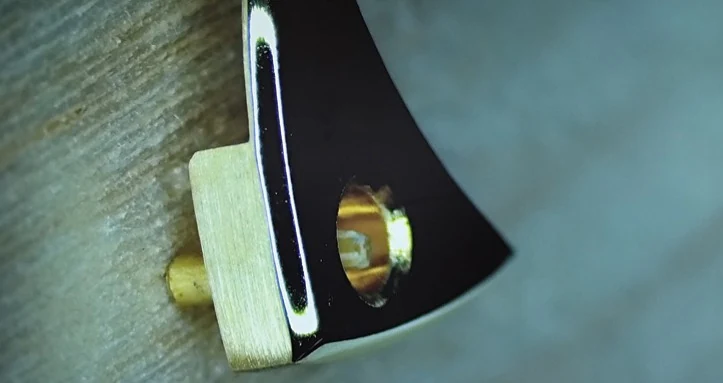
A clear, readable boundary with no unnecessary softness or break.
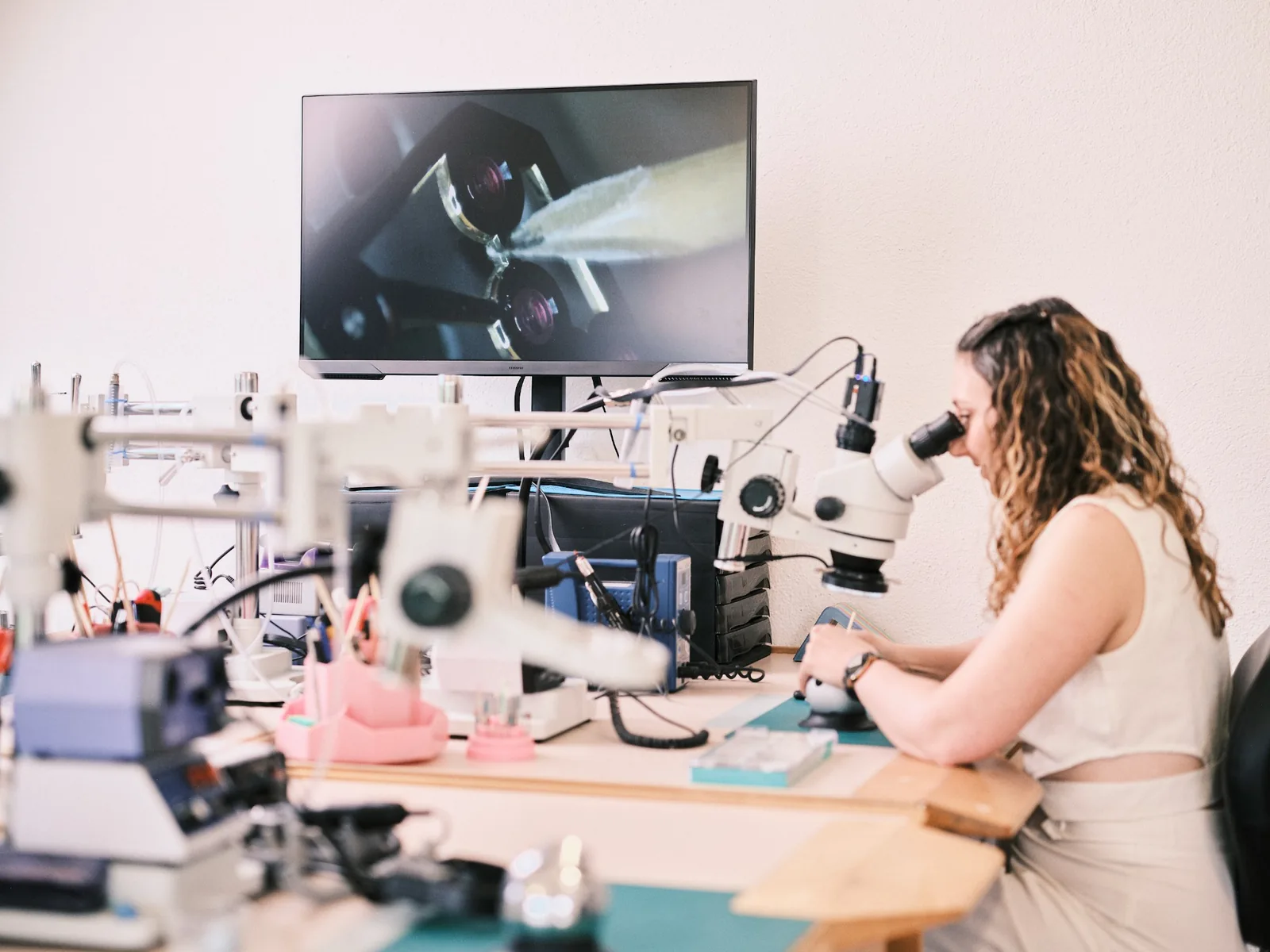
Watch bevelling training · Les Brenets · Switzerland
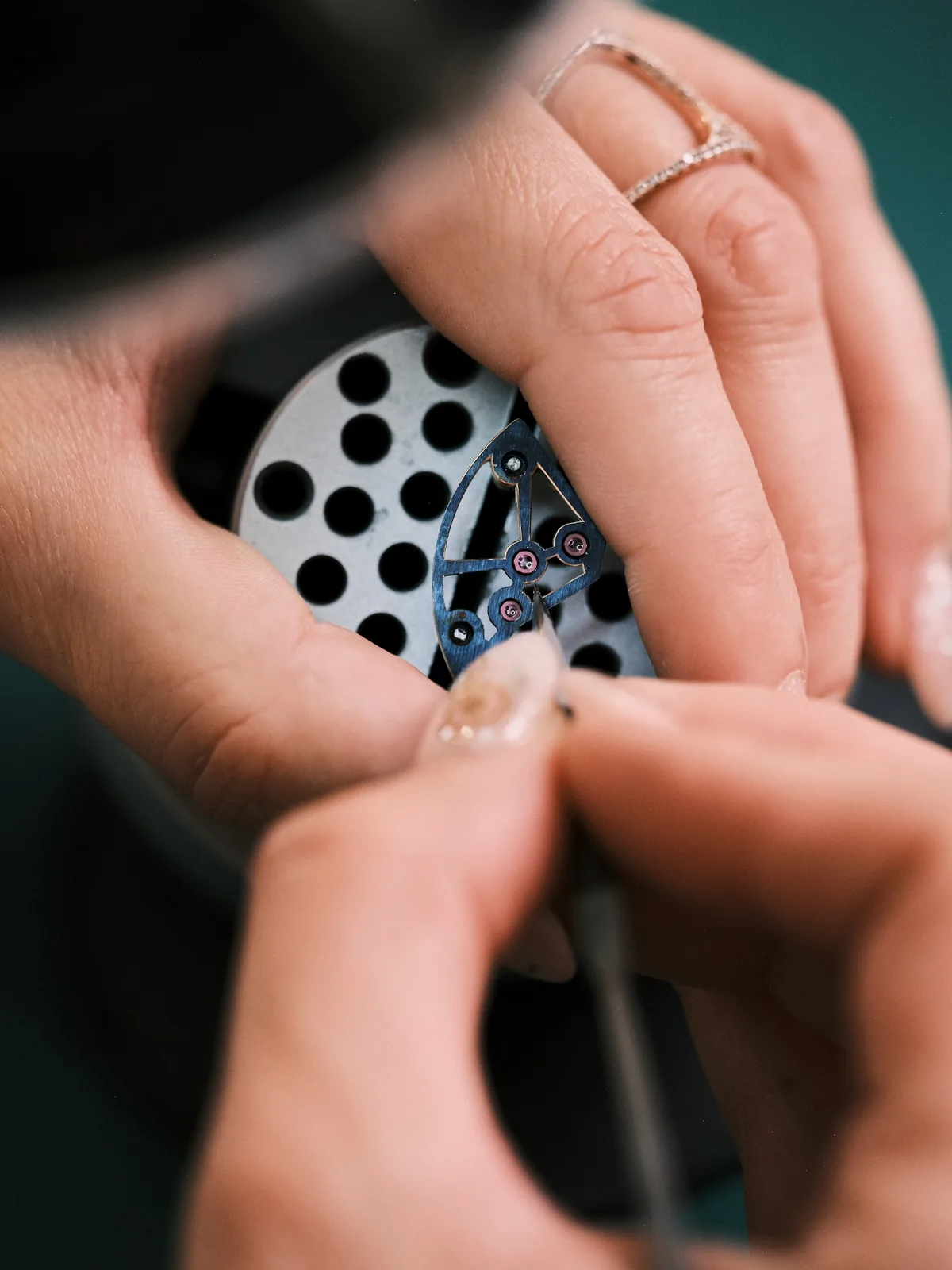
Alexandra Schmitz teaches hand and micromotor anglage on real watch components. With no more than four participants, each deviation can be seen, named and corrected while the technique is being built.
The component as a language
Width, edge definition, transitions and reflection: four criteria for understanding what holds and what needs correction.
Select a marker. Then activate the loupe to explore the material freely.

Point or drag across the component.
A clear, readable boundary with no unnecessary softness or break.
A controlled band that follows the form instead of fighting it.
Transitions understood and refined along a deliberate path.
Continuous light reveals consistency more clearly than words.
The method in motion
Read, name, connect, correct and inspect: five stages that turn a visible defect into an understood correction.
Scroll through the five stages.
Read the light before acting.
Width,
edge, surface and reflection provide the first diagnosis.
Criterion · light
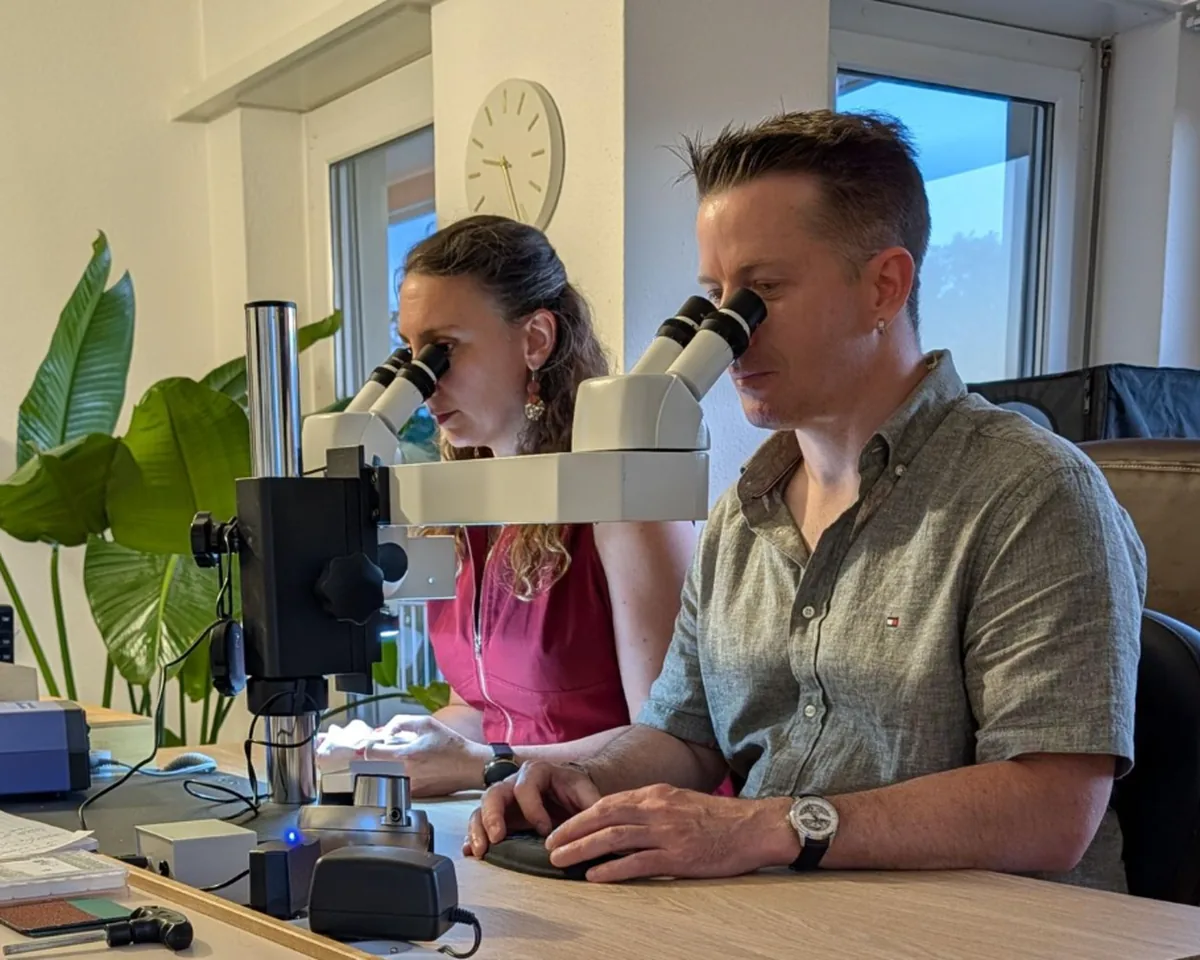
Name the deviation precisely.
The
enlarged image connects a visible defect with its cause in
the gesture.
Criterion · geometry
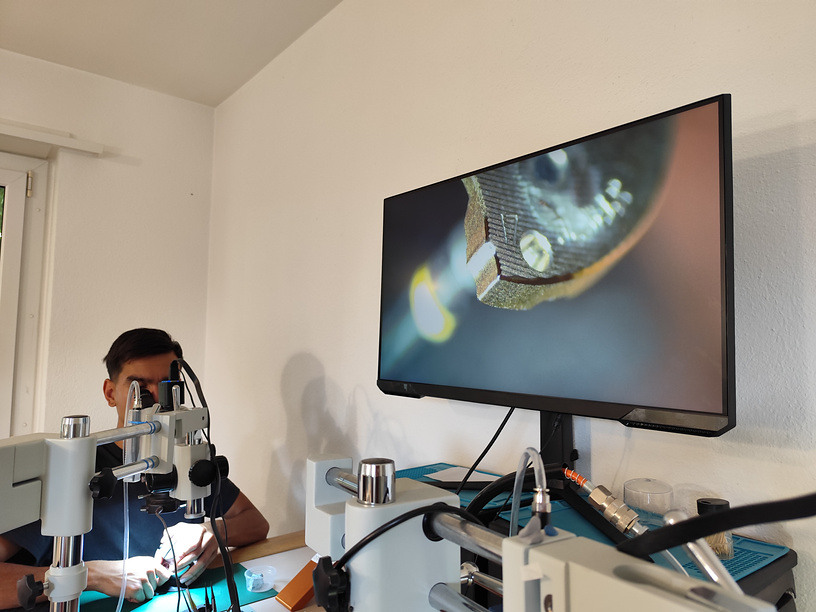
Alexandra points out the deviation while the gesture is
taking shape.
She names the pressure, angle, support or path, then
lets the student return to the component.
Criterion · path
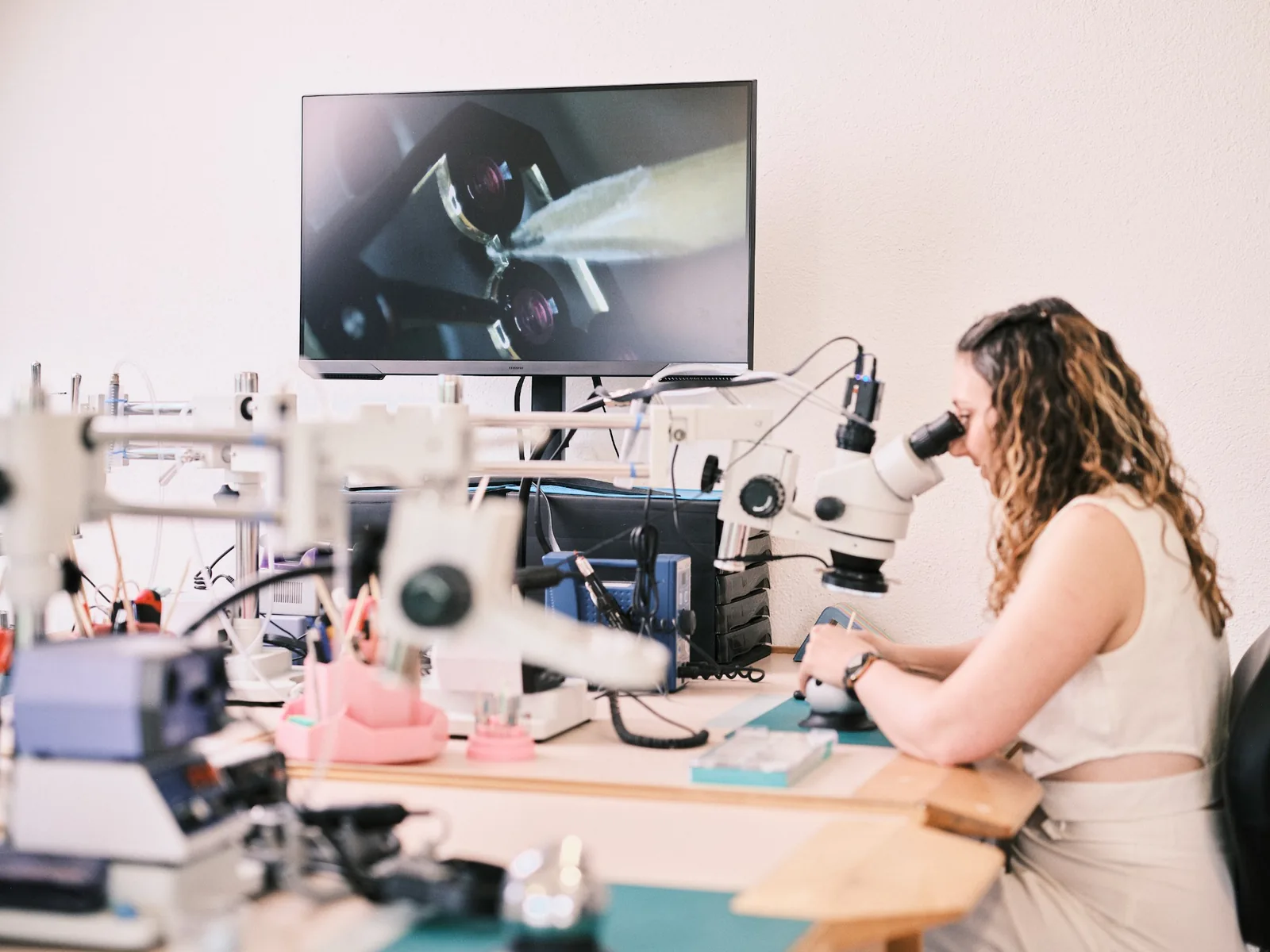
Return to the component with a clear instruction.
The student knows where to intervene, why, and with
which tool.
Criterion · correction
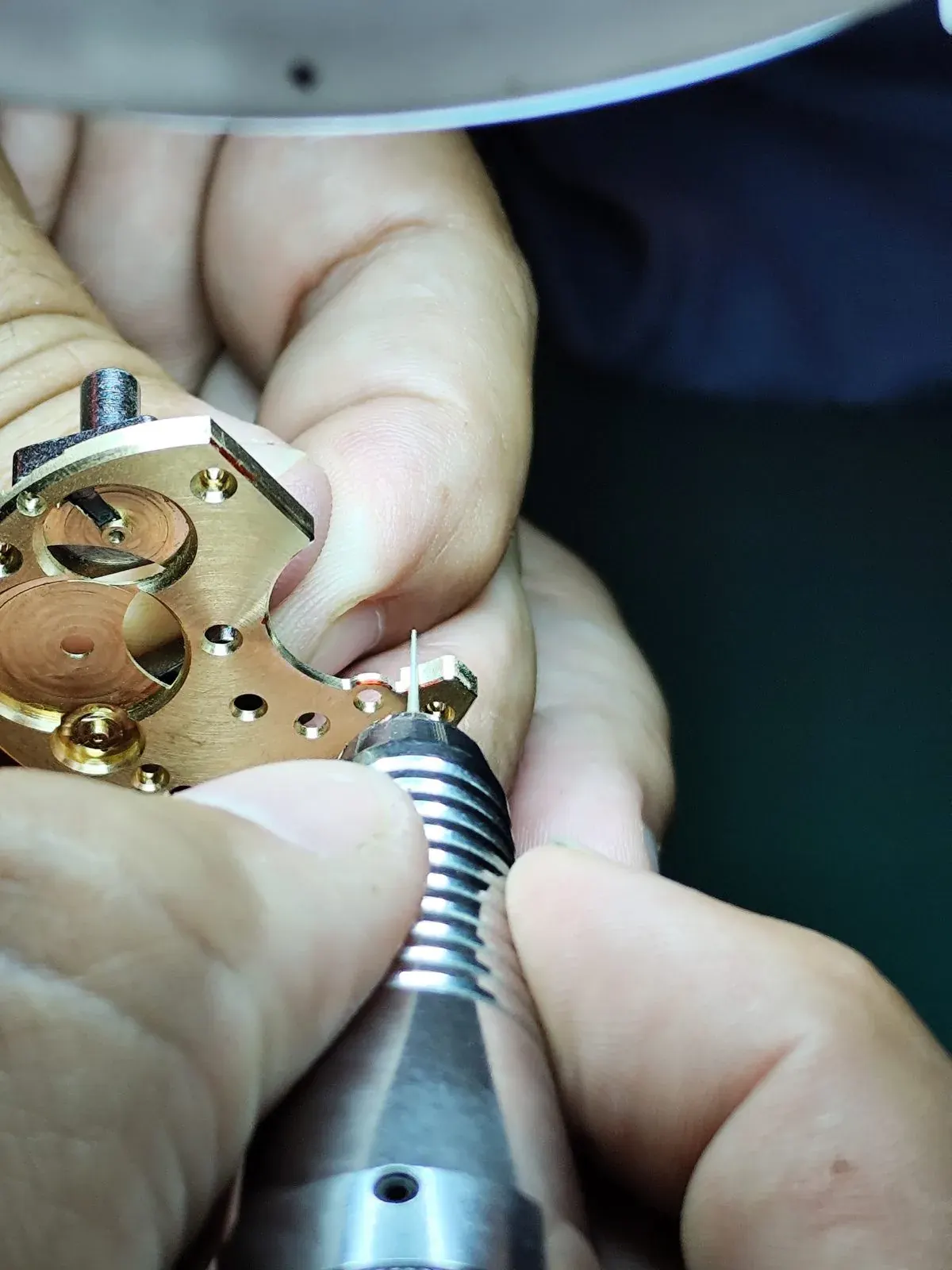
Train the eye as much as the hand.
Consistency grows from observable criteria,
repetition and documentation.
Criterion · consistency
A founding line
“What if true luxury meant having gold in your hands?”
Before chasing shine, students learn to recognise uneven width, weakened edges, inaccurate transitions and broken reflections. That reading guides the tool and the correction.
Seeing too late
Without shared observation, pressure, angle or trajectory can settle before they are understood.
Correcting without understanding
Reading the reflection, width and edge makes it possible to understand where to intervene and how far to go.
Confusing shine with accuracy
Inspection connects the visual effect to volumes, transitions and boundaries.
Three functions, three durations
The 8-hour day opens the workshop and establishes a starting point. The 100-hour programme builds the complete method. The 40-hour course addresses a focused need after assessment; it does not replace the reference programme.
8 hours
CHF 600
Discover the tools, test the gesture and obtain a clear assessment of what could follow.
CHF 600 is credited back when the 100-hour programme is subsequently signed.
100 hours
CHF 8,000
Build a complete working method: observation, hand and micromotor bevelling, correction and progressive autonomy.
40 hours
CHF 4,000
A targeted intensive path for profiles whose existing bases or observed aptitude make this format relevant.
Student work
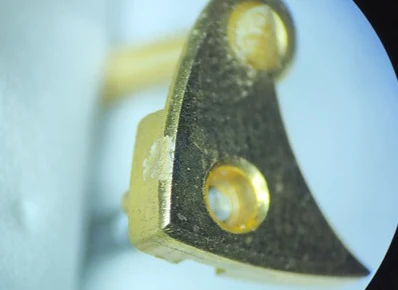
These images show work completed during training. Move the divider to compare edges, widths, transitions and reflections, then select another component.
Alexandra & the workshop
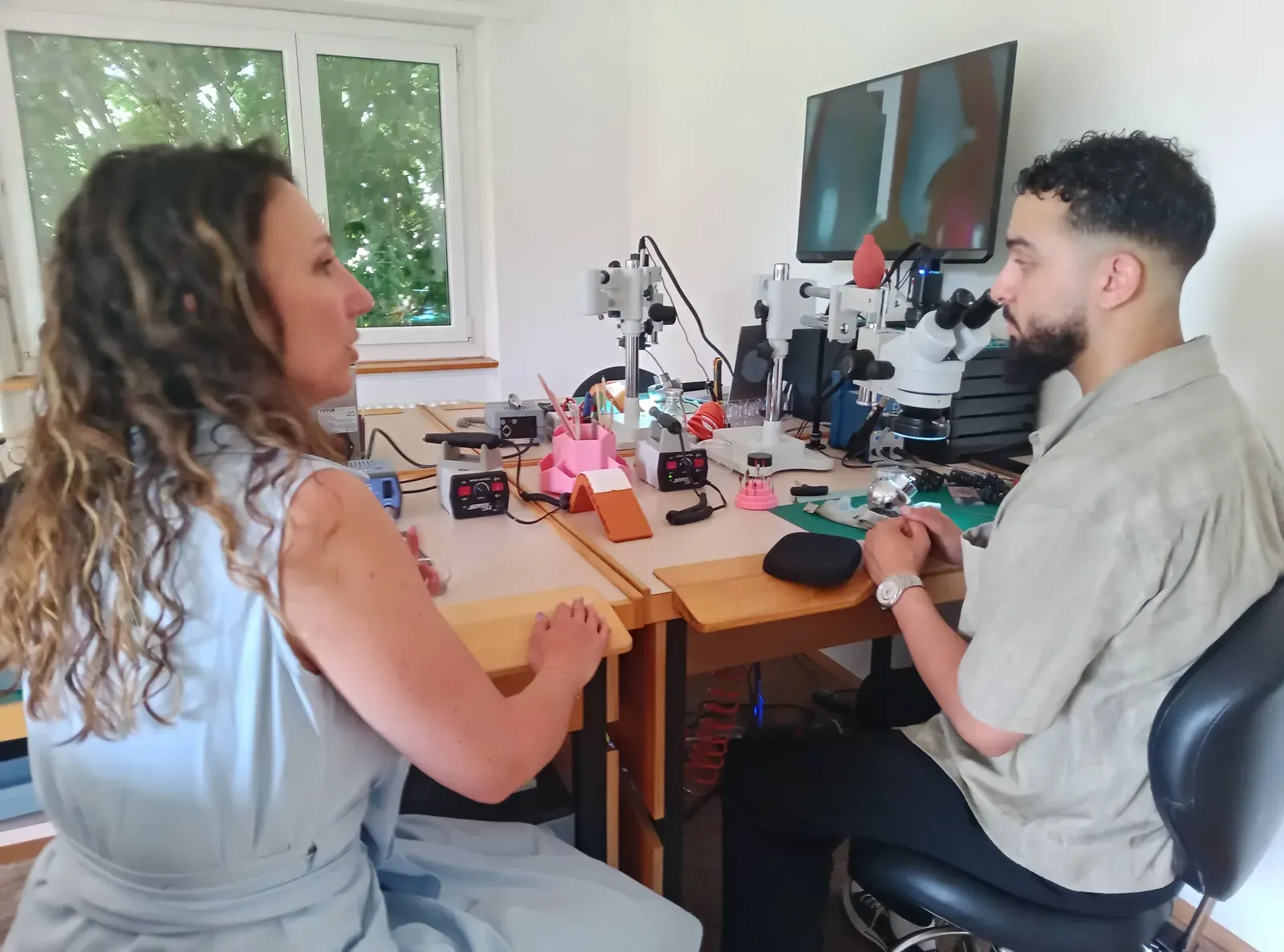
A hand and micromotor beveller since 2006, Alexandra Schmitz has worked in production, quality inspection, workshop management and professional training. She opened Art de l’Anglage in Les Brenets in 2025 to teach groups of no more than four.
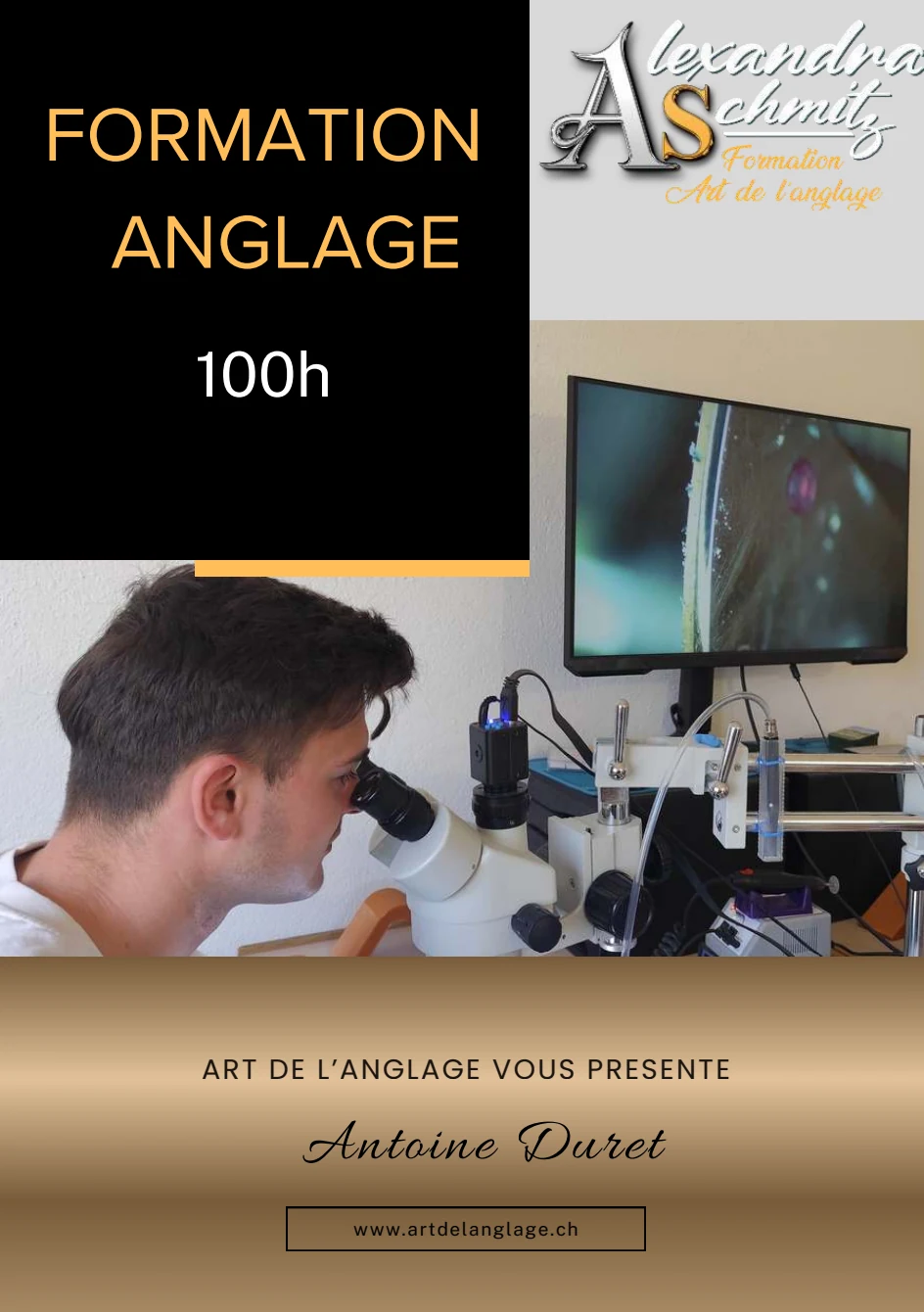
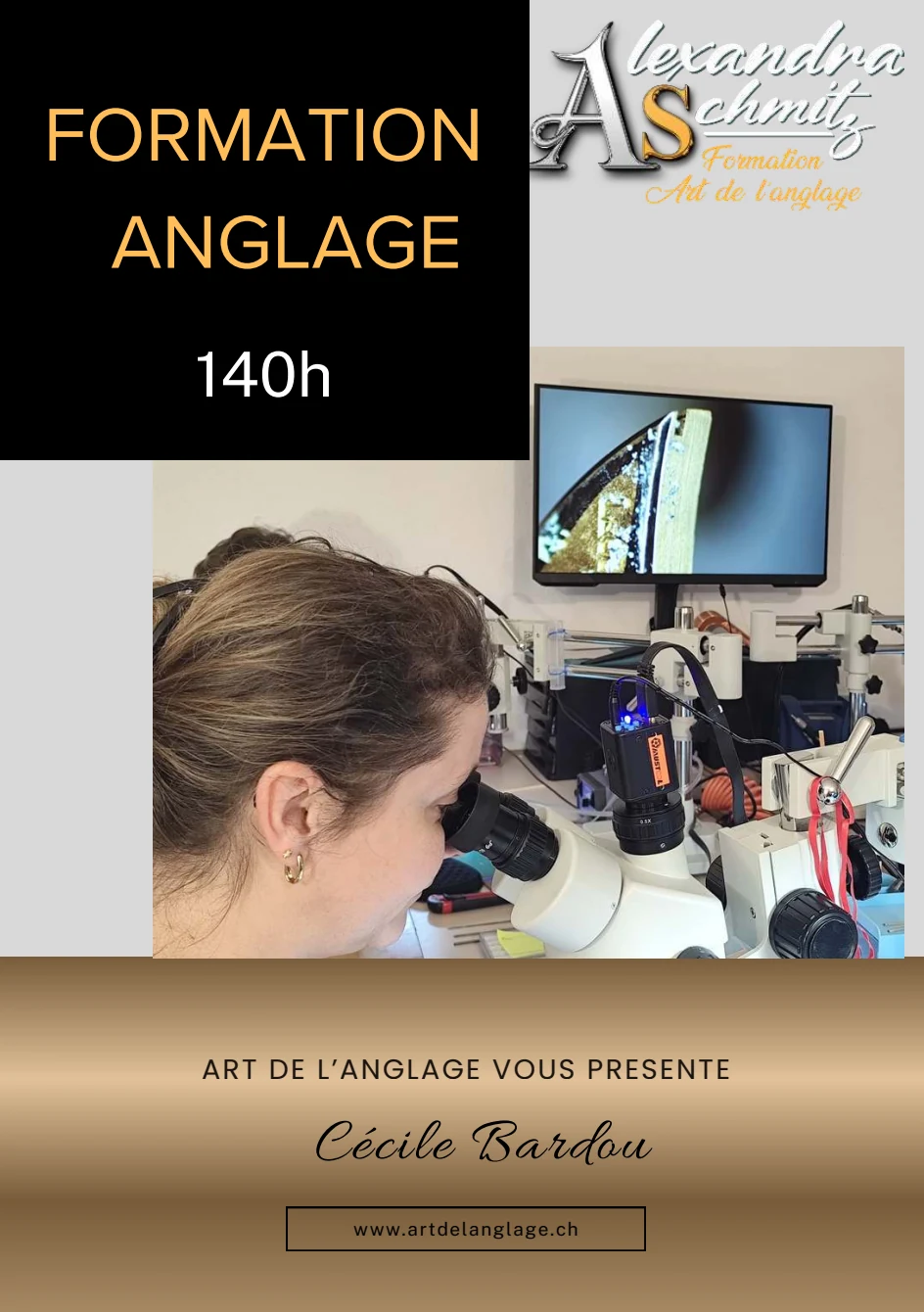
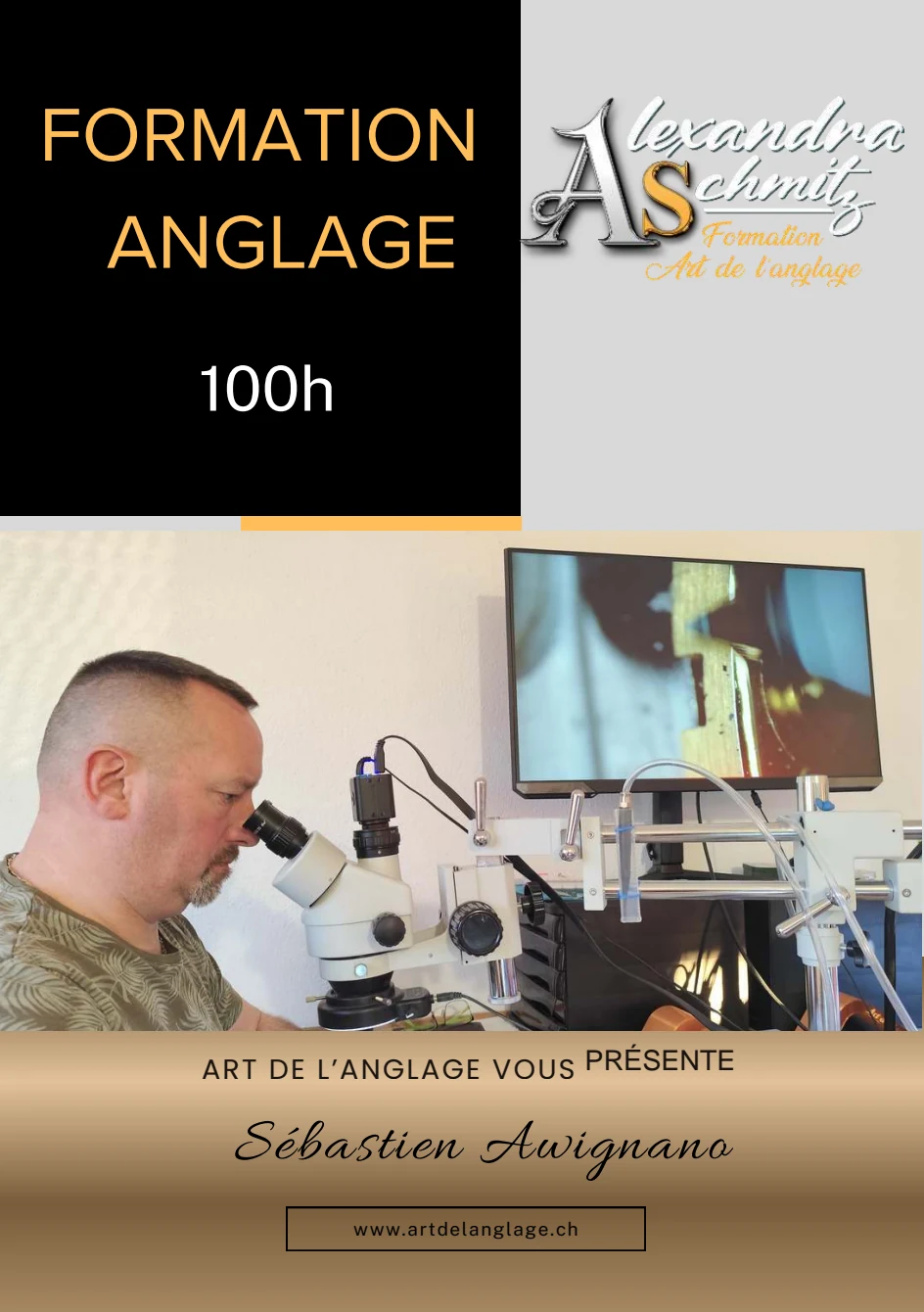
The dual-view microscope places Alexandra and the student in front of the same detail. The camera and 4K screen extend that shared observation: the deviation becomes visible, its cause is understood and the student performs the correction.
“Technology does not replace the hand. It lets us see exactly what the hand is learning.”
Documented paths
Each portfolio brings together components, corrections and workshop observations. Projects change; the same precise criteria make progression readable.
Companies & workshops
Teams
Training on your components, grounded in the workshop’s actual practice.
Development
Geometry, access and the expected result are framed before any commitment.
Subcontracting
Finish, volume and timing are reviewed case by case.
Concrete markers
Twelve private participants and nine people from companies have already trained in Les Brenets or with Alexandra on site.
Documented case · Urban Jürgensen
Alexandra first assessed the team’s needs, then trained them at the company using its components and working constraints. Advanced training in Les Brenets consolidated the method; the team now continues the work in-house.
Recognition and publications



Direct contact
An introduction to anglage, a complete programme, focused development or team training: describe your experience and objective. Alexandra replies herself with a clear first recommendation.